

You’ll need one porta potty for every 50-75 people during standard 4-hour events in Amarillo; however, construction sites require stricter ratios, with one unit per 20 workers for full workweeks. Your capacity calculations must account for food and beverage service, which can increase usage by 30-50%, as well as Amarillo’s hot climate conditions that affect both usage patterns and maintenance requirements. Understanding these variables and local compliance standards will help you optimize your rental planning.
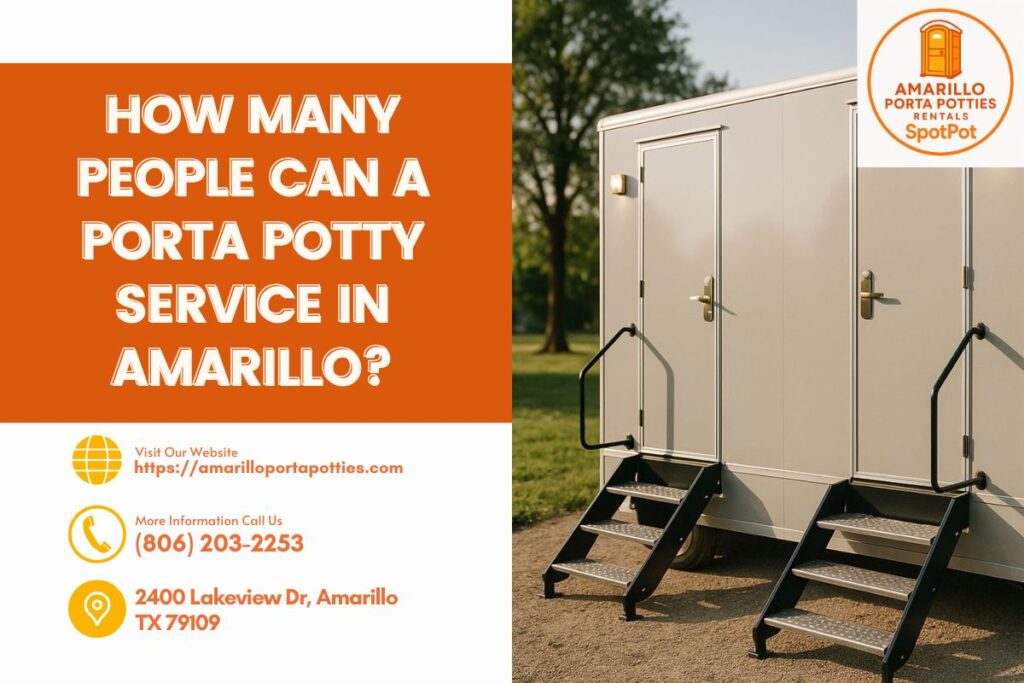
When planning portable restroom requirements for your event or project, you’ll need to calculate capacity based on the duration of attendance, the number of guests, and the type of facility access.
Industry standards recommend one unit per 50 people for standard 4-hour events, scaling to one per 75 people for shorter gatherings. Construction sites require one unit per 20 workers for a 40-hour work week.
You’ll adjust ratios based on alcohol service, which increases usage by 15-20%, as well as demographic factors such as age distribution.
Weather conditions affect capacity; cold temperatures reduce usage, while heat increases it. Factor in accessibility requirements, with ADA-compliant units serving 1-2 wheelchair users effectively.
Monitor peak usage periods during lunch hours and breaks. Intelligent scheduling prevents bottlenecks while maintaining sanitary conditions throughout your event duration.
See also: portable toilet rental services
Most individuals utilize portable restrooms 0.4 to 0.6 times per hour during standard events, with this baseline rate serving as the foundation for accurate capacity planning.
You’ll observe higher frequencies at beer festivals or events with extensive beverage service, where usage can reach 0.8 times per hour per person. Corporate events typically maintain the standard range, while construction sites may see reduced frequency due to scheduled break patterns.
Calculate your requirements by multiplying the attendee count by the usage rate and then by the event duration. For a 200-person outdoor festival lasting 6 hours, you’d need capacity for 480-720 total uses.
Factor in peak usage periods, typically occurring 2-3 hours into events, when demand can spike 40% above average rates for ideal service delivery.
Standard industry ratios establish specific portable restroom requirements based on event type and duration.
You’ll need one unit per 50 people for four-hour events, scaling to one per 75 people for shorter gatherings.
Construction sites require one unit per 10 workers for standard eight-hour shifts, with supplementary units for extended projects.
For outdoor festivals, you’ll implement a 1:40 ratio during peak hours, positioning units strategically near food vendors and beverage stations.
Corporate events require a ratio of 1:30 to maintain professional standards.
High-turnover venues, such as concerts, require a 1:25 ratio with accessible, ADA-compliant units comprising 5% of the total inventory.
Weather conditions, alcohol service, and demographic factors influence these calculations.
You’ll optimize placement using traffic flow analysis and service accessibility requirements to guarantee compliance with local health department regulations.
Several essential variables directly impact portable restroom capacity calculations beyond basic attendance figures.
You’ll need to evaluate event duration, as more extended gatherings require more frequent servicing or supplementary units. Food and beverage consumption markedly affects usage patterns—events serving alcohol or large meals increase demand by 30-50%.
Weather conditions matter too; hot temperatures drive higher fluid intake, while cold weather may reduce usage frequency.
Demographics play an essential role in your calculations. Mixed-gender events require balanced accessibility, while different age groups have varying usage patterns.
Event type influences capacity requirements—formal gatherings generate different usage than casual outdoor festivals.
You must also consider site logistics: proximity to permanent facilities, accessibility requirements for ADA compliance, and service vehicle access.
These variables help you optimize your porta potty deployment strategy for maximum efficiency and customer satisfaction.
When calculating porta potty requirements, you must analyze both the total event duration and expected daily traffic patterns to determine ideal unit quantities.
Single-day events require different calculations than multi-day festivals or construction projects spanning weeks. During peak traffic periods, you’ll need supplementary units in addition to the baseline requirements. Weekend events typically generate 40% higher usage rates than weekday gatherings.
Construction sites maintain consistent daily patterns, while festivals experience surge demands during headliner performances or meal periods. Duration impacts maintenance schedules and waste accumulation rates. Events exceeding 8 hours require mid-day servicing for peak user experience.
Multi-day events need daily pump-outs and restocking. Calculate your base requirement, then multiply by 1.25 for events lasting 6-12 hours or 1.5 for full-day occasions with concentrated attendance patterns.

Food and beverage consumption directly correlates with restroom usage frequency, requiring precise calculations to accommodate increased demand patterns. You’ll need to adjust your porta potty quantities based on consumption metrics to maintain ideal service levels.
| Consumption Type | Usage Multiplier | Recommended Units Per 100 People |
|---|---|---|
| Light Refreshments | 1.2x | 3-4 |
| Full Meals | 1.5x | 4-5 |
| Alcohol Service | 2.0x | 5-7 |
| High-Caffeine Events | 1.8x | 4-6 |
| Extended Food Service | 2.2x | 6-8 |
When planning events with substantial food service, calculate baseline requirements and then apply consumption multipliers. Alcoholic beverages create the highest demand surge, while caffeine accelerates usage patterns. You’ll achieve compliance standards by factoring these consumption variables into your initial capacity planning protocols.
Different porta potty models offer varying capacity thresholds that directly impact service intervals and maintenance scheduling requirements.
You’ll need to match your unit specifications with your event’s demographic patterns and duration to achieve peak performance.
Standard capacity ratings determine your service frequency:
You can’t exceed manufacturer specifications without compromising sanitation standards and regulatory compliance.
Tank volume, ventilation systems, and waste processing capabilities impose significant limitations that impact your operational planning.
Strategic unit selection prevents overutilization while maintaining health department standards throughout your service period.
Most rental applications begin with standard single units, which form the backbone of portable sanitation logistics across construction sites, outdoor events, and temporary work locations.
You’ll find that these units accommodate 8-10 users per 40-hour workweek under ideal conditions; however, actual capacity depends on environmental factors and usage patterns.
Standard units feature 60-gallon waste tanks with integrated ventilation systems that enhance operational efficiency while maintaining compliance standards.
You’re investing in proven technology that strikes a balance between cost-effectiveness and reliability.
These units include lockable doors, non-slip flooring, and translucent roofing for natural illumination.
When planning deployment strategies, calculate one unit per 10 workers for 40 hours.
Environmental stressors, such as extreme temperatures or high-traffic scenarios, require adjusted ratios.
You’ll improve service intervals by monitoring usage data and implementing predictive maintenance protocols.
While standard units meet basic requirements, ADA-compliant and high-capacity models address specialized operational demands that necessitate enhanced accessibility and extended service intervals.
ADA-compliant units feature wider doorways, interior handrails, and wheelchair-accessible configurations that meet federal accessibility standards. These models typically accommodate 50-75 users per day while maintaining compliance protocols.
High-capacity units feature enhanced waste storage systems and improved ventilation mechanisms, allowing for service intervals of 7-10 days, depending on usage patterns.
Key operational specifications include:
Although initial unit calculations provide baseline coverage, specific operational indicators signal when you’ll need extra porta potties to maintain service standards and regulatory compliance.
Monitor these critical metrics to determine when supplementary units become necessary:
| Indicator | Action Threshold |
|---|---|
| Usage frequency | Every 10-15 minutes per unit |
| Wait times | Exceeding 2-3 minutes |
| Maintenance cycles | Required twice daily |
| Compliance violations | Any regulatory infractions |
You’ll notice degraded service quality when units approach capacity limits. High-traffic periods, extended event durations, and unexpected attendance increases require immediate unit supplements. Peak usage patterns typically occur during meal breaks, intermissions, and changeover periods.
Proactive monitoring prevents service disruptions and maintains sanitary conditions. Deploy supplementary units before reaching critical thresholds rather than responding to complaints or violations.
Extended events spanning multiple days present unique logistical challenges that require specialized planning beyond standard single-day calculations.
You’ll need to account for cumulative usage patterns, maintenance schedules, and accessibility requirements that differ significantly from those of single-day deployments.
For multi-day events, you should implement these critical considerations:
Your overnight events require improved monitoring protocols and proactive maintenance strategies.
You’ll optimize user experience while maintaining compliance with health regulations through strategic placement and consistent servicing intervals that prevent capacity overload.
Hot weather conditions amplify porta potty usage demands and accelerate waste accumulation rates, requiring you to adjust your standard deployment calculations by 40-50% above baseline requirements.
Texas heat intensifies bacterial growth and chemical breakdown, necessitating the implementation of improved sanitization protocols and frequent waste extraction cycles.
You’ll need increased ventilation systems and heat-resistant hand sanitizers that won’t evaporate rapidly. Deploy supplementary units during peak afternoon hours when temperatures exceed 95°F, as user frequency spikes considerably.
High-traffic scenarios demand real-time monitoring systems to prevent capacity overruns and maintain compliance standards.
Consider implementing temperature-controlled units with cooling features to deliver premium service.
Your maintenance schedule must shift to every 4-6 hours during extreme heat events, preventing system failures and ensuring a consistent user experience throughout extended outdoor operations.
Understanding Amarillo’s unique event landscape enables you to optimize porta potty deployments for maximum efficiency and user satisfaction. The city’s diverse events require strategic planning that takes into account local conditions and attendance patterns.
Amarillo’s event calendar demands specialized approaches:
You’ll optimize operational efficiency by analyzing historical attendance data, weather patterns, and venue-specific logistical constraints.
This data-driven approach guarantees peak unit placement and service scheduling.
When planning porta potty deployments, it is essential to match unit specifications and quantities to the specific event characteristics that directly impact usage patterns and operational requirements.
| Event Type | Units Per 100 People | Special Considerations |
|---|---|---|
| Construction Sites | 1 standard unit | Hand sanitizer stations, weekly service |
| Music Festivals | 1.5 units | ADA compliance, improved lighting |
| Corporate Events | 1 deluxe unit | Premium amenities, frequent maintenance |
| Sporting Events | 2 standard units | High-capacity tanks, strategic placement |
| Weddings | 1 luxury unit | Aesthetic appeal, mirror upgrades |
You’ll optimize deployment efficiency by analyzing event duration, alcohol service, demographic profiles, and site accessibility. Construction projects require robust units with extended service intervals, while premium events demand luxury amenities. Festival environments necessitate increased capacity due to prolonged attendance and beverage consumption, requiring strategic positioning near high-traffic zones.
Although you’ve identified your event requirements, collaborating with Amarillo Porta Potties Rentals | SpotPot’s certified planning specialists ensures regulatory compliance and optimal resource allocation.
Our technical consultants utilize advanced capacity modeling algorithms to enhance your sanitation infrastructure. We’ll conduct thorough site assessments, analyzing foot traffic patterns, duration variables, and demographic considerations to establish precise unit quantities and strategic placement coordinates.
Partner with our experts to achieve:
You’ll receive data-driven recommendations that eliminate guesswork, reduce operational inefficiencies, and deliver seamless sanitation solutions tailored to Amarillo’s unique environmental conditions.
If your porta potty reaches capacity during an event, you’ll need immediate pumping service. Contact your rental provider’s emergency line for rapid response. Professional pumping trucks can restore full functionality within 30 minutes, ensuring uninterrupted service.
You’ll need daily cleaning for multi-day events to maintain ideal hygiene standards and user satisfaction. SpotPot’s systematic maintenance protocols guarantee consistent sanitation levels, preventing overflow situations while meeting health compliance requirements throughout your event duration.
Yes, you can relocate porta potties during events using specialized lifting equipment. However, you’ll need proper site access for service vehicles and must coordinate timing to minimize disruption while maintaining sanitation compliance standards throughout the relocation process.
You’ll typically invest $75-$125 for standard units versus $150-$300 for luxury models. Premium features like hand-washing stations, interior lighting, and upgraded ventilation systems increase costs, but they’ll significantly enhance your guests’ experience and satisfaction.
You’ll need permits for public property placement in Amarillo. Contact the city’s permitting office before installation to guarantee compliance with local regulations. We’ll guide you through the streamlined application process for faster approval.



© 2026 Amarillo Porta Potties Rentals | SpotPot. All Rights Reserved.